

Dear ABMInsider,
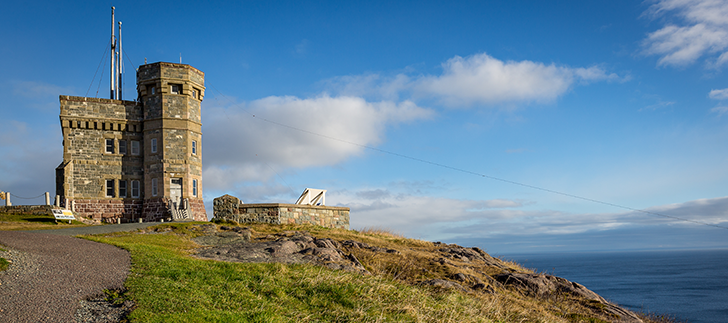
In 1901, a man named Guglielmo Marconi stood on a hill in St. John’s, N.L. and received the first transatlantic wireless signal. The technology barely worked. The business model did not exist. Many people claimed it was fake. But within two decades, wireless had remade global communication, and Newfoundland's Signal Hill was where the future had arrived first.
I thought about Marconi recently while considering the swath of resource-related projects and developments we’re covering in our September issue. It’s a substantial lineup of impressive projects but Hydrogen? That ain’t one of them—and the omission stands out because of just how prominent our coverage of World Energy GH2 was just a few years ago.
In 2022, with German Chancellor Olaf Scholz standing on a Newfoundland wharf, World Energy (and more than a dozen others) bet billions on wind power generation in western N.L. in hopes of winning the race to become Europe's ultimate clean fuel depot. Then the hydrogen market deflated. Costs stayed stubborn, German buyers hesitated, projects everywhere quietly shrank. Newfoundland, the narrative seems to conclude, fell for a fad.
But… I want to suggest that this narrative gets the problem exactly backwards. The question is not whether World Energy bet on the wrong technology. The question is whether they bet on the wrong clock.
Consider what economists who study innovation have long observed about infrastructure-scale technologies: they are almost never adopted on schedule. When they are adopted, it’s often after a decade (or more) of embarrassment. Solar power, for example, was a punchline; now, it's the cheapest electricity in human history. The pattern is so common it has a name: the productivity J-curve. First you look foolish. Then you look prophetic. The catch is that you only get to the second part if you survive the first.
This is where our vulnerability lies, and it has nothing to do with electrolyzers. Small economies experience waiting differently than large ones. When a hydrogen project stalls in Texas, Texas shrugs. When one stalls on the Port au Port Peninsula, it is the economy—the tax base, the apprenticeships, the reason a 24-year-old welder stays instead of flying to Fort McMurray. Big places can afford to be early. Small places pay compound interest on patience.
But consider this: the wind resource that was supposed to make ammonia does not care what it makes. It can feed a rack of data centres, an expanded grid, a transmission line, green steel—whichever buyer shows up first.

The smartest thing World Energy GH2 did may turn out to be the least glamorous: securing land, permits, port access and wind rights. They were not building a hydrogen industry. They were building industrial capacity and flexibility—and calling it hydrogen because that was the word that opened chequebooks in 2022.
Ultimately, their prescience wasn’t enough to save them from credit over-extensions and subsequent insolvency. But the assets they built are part of the sale, and may well be the conduit for future power development under new management.
All of which is what had me thinking about Marconi in the first place. While his transatlantic wireless business was initially a huge commercial successful, it was eventually eclipsed by debt and competitors in the late ‘90s and early aughts. But Signal Hill, where it all started, remains.
The wind on the Port au Port Peninsula is not a hype cycle. It is a fact of geography, and geography is the one asset that never has to survive a downturn.
The wager was never really on hydrogen. It was on whether the wind would still be worth something when the world made up its mind.
P.S. While World Energy’s much-hyped attempt to explode into green hydrogen prominence did not come to fruition, EverWind Fuels in Nova Scotia has just moved a big step closer to reality. A week ago today, on July 7, the Government of Nova Scotia announced approval of its largest wind energy project to date. According to the release, “Once operational, it will generate about 1,264 megawatts of clean electricity, enough to power the equivalent of about 404,000 homes. It will also reduce Nova Scotia's annual greenhouse gas emissions by about 1.94 million tonnes—the equivalent of taking about 420,000 gas-powered cars off the road.” The announcement came too late for inclusion in our September issue, but this won’t be the last you’ve heard from us on EverWind. Stay tuned.
 Dawn Chafe
Co-owner & Executive Editor
Atlantic Business Magazine
[email protected]